

A picture is worth a thousand words1.
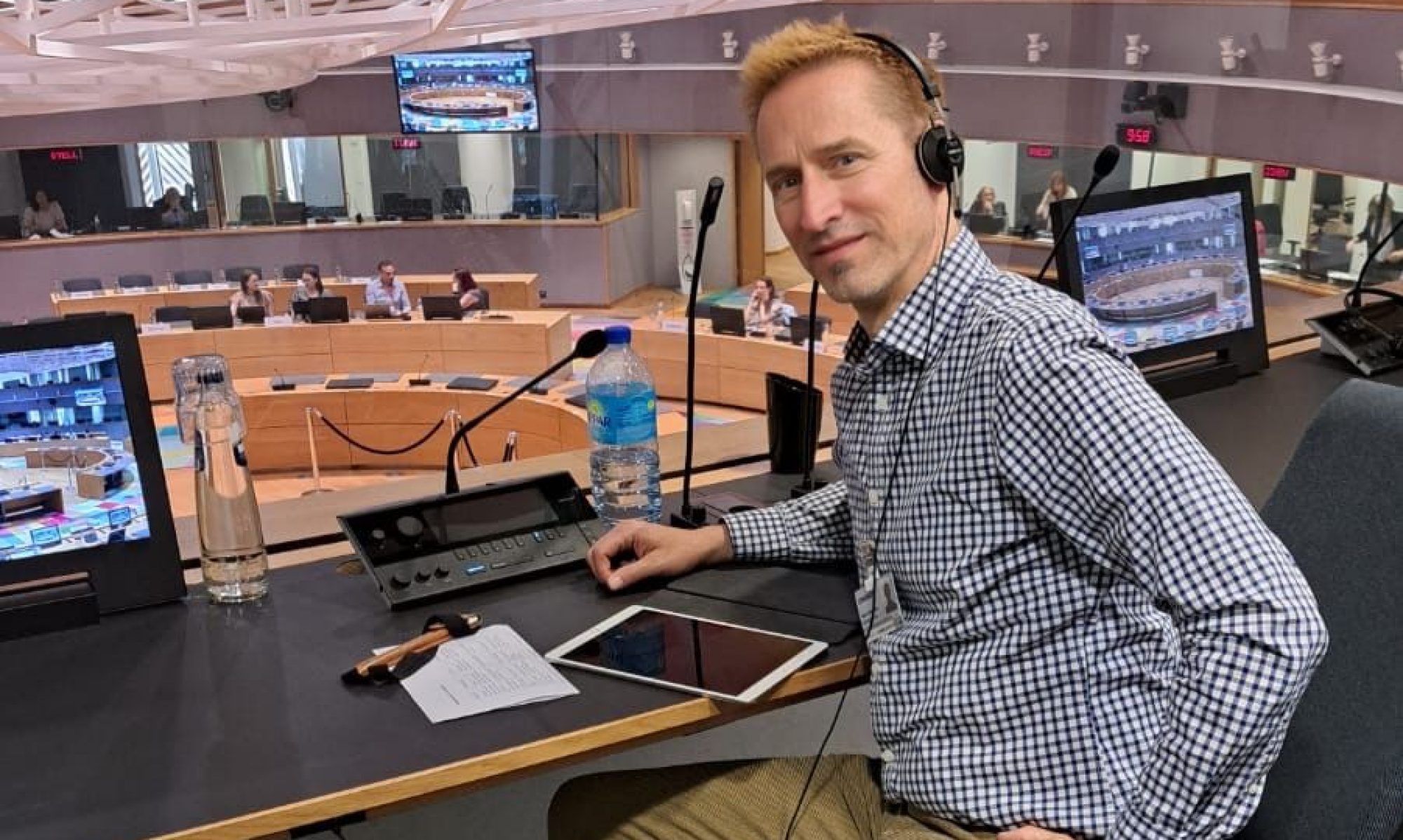
For interpreters, those words are more than a proverb. They are our method.
We are master linguists, yet we don’t get hung up on words. We work with concepts. That’s why our note-taking isn’t verbatim. We don’t necessarily write what was said; we capture what it means—using symbols, arrows and visual shorthand rather than complete sentences.
I’ve read a lot about the history of our profession and about interpreter cognition. One observation resurfaces again and again in the literature on interpreting: interpreters do not necessarily have photographic memories—but they do often have visual memories. Meaning is stored as imagery rather than text.
As a child, I struggled with numbers. Four-and-twenty. Six-and-fifty. Four twenties and ten… My brain simply refused to keep them in order. Then I discovered, if I could picture the numbers, then I could reproduce them. The image unlocked recall.
As it turns out, living inside a world of images is one of the things I love most about this profession. There is hardly a day that goes by without learning something new, solving a new puzzle, or finding a new visual connection to a difficult topic. I get through and master each day one image at a time.
Just recently, I worked on a high-stakes negotiation. My client was a French-speaking high-net-worth individual from an Arabic-speaking country. Her negotiating parties were German-speakers — representatives of major companies across Europe. The register was high on both sides. One of those assignments where conscious thought quietly steps aside and skilled execution simply takes over. The images in my head were clear. Everything landed exactly where it should. I left quietly satisfied and the client’s generous feedback suggested she was equally pleased.
A life of their own
But occasionally, the images in my head decide to take on a life of their own.
Last week, I had already finished my assigned caseload for the day, when I was approached to take just one more hearing. The scheduled interpreter was delayed and they needed someone now. All the info I was given for these legal proceedings was: a workers’ compensation case on unfair dismissal following an injury. Estimated hearing time: 30 minutes. The language pair was English / German — an Austrian legal team on the one side (not my native variety), and a very tall, broad-shouldered, deep-voiced American claimant on the other. Legal language. Medical terminology. Dialectal hurdles. Plenty to keep any interpreter (with or without prior preparation) on their toes.
The hearing commenced with general statements then came the routine question to the claimant.
“Sir, please state your profession for the record.”
“I’m a professional hockey player.”
Given all the euphoria at the moment around the Football World Cup dominating every screen, you’d think my brain might have conjured up football pitches, nerve racking penalty shoot-outs sans fin or even late-night calls from heads of state about a clearly unreasonable red card.
Wrong.
My visual memory took a very unwanted turn and decided to revisit a recently released HBO hockey series instead. The moment I heard the words, “I’m a hockey player,” the assignment became a high-stakes juggling act between professional Conference Interpreting and an imagination that had quite clearly decided to skate off in a different direction.
I was desperately trying to convince my visual memory that Austrian led courtroom proceedings had absolutely no place for testosterone-filled locker rooms, clouds of steam, impossibly broad shoulders and an inordinate number of over-muscular backsides. Suddenly, my visual memory had become my own Heated Rival.
Somehow, my professional brain won!
Interpreters aren’t machines. We process language through concepts, and, for many of us, those concepts arrive as images. Most of the time those images are our greatest ally. They anchor meaning, support recall and allow us to recreate a speaker’s ideas with remarkable precision. However, every now and then, those same images decide to entertain themselves.
La fin du conte ?
The record was accurate. The legal reasoning remained intact. Professional dignity survived. Once again, I was reminded that a single image really can change everything.
Every profession has its stories. Ours unfolds one image at a time.
Before I raise a glass to our brilliant profession, I’d love to hear your stories. Have you ever taken an unexpected mental detour? Has your imagination ever become your greatest ally—or your most heated rival?
- Image by gerren0 from Pixabay ↩
Discover more from RvL Consultants Intl. Ltd
Subscribe to get the latest posts sent to your email.